Showing posts with label michael jackson. Show all posts

Saturday, May 21, 2011

The Victory Tour Debacle


The story about the Victory Tour is so complicated, so many things and people involved, circumstances and situations, it's hard to put it all down. But it's enough to say that the experience was not a positive for Michael, his family, nor the fans.
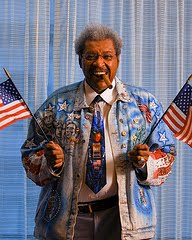
One thing is for sure, Michael, after years of putting out the image of the happy and wholesome Jackson family, was now being manipulated by his family and other unsavory people. Though that was not her intention, Michael's mother, in convincing him to tour for the sake of his brothers, despite his feelings against it. Don King, for making the promotion and tour a side show experience. His brothers, who only wanted to make a quick dollar, and lots of it, with little care, or concern, for the details. Lawyers, representing all sides, making an easy buck.
What was the real deal about the ticket debacle? Joe Jackson, Don King, and Chuck Sullivan, who was the head of Stadium Management Corporation, and who's family owned Foxboro Stadium, came up with this "brilliant" idea. Tickets for the tour would be $30 each, but you had to buy lots of four tickets. When you ordered the tickets, names would be chosen at random by a computer drawing using coupons cut out of newspaper ads. People had to send a $120 postal money order, plus a $2 service charge for each ticket, and the coupon, in a "standard Number Ten envelope" to the ticket printed in the advertisement. WHEW! BUT, that didn't guarantee you would get the tickets. See why people were upset? While acts like the Rolling Stones' and Bruce Springsteen were selling $16 ticket, Michael felt that their should have been $20, but he was outvoted. The tickets were too high for white middle-class kids, let alone kids from the inner cities.
If you got the tickets, you didn't know which show you were going to, until two days before the concert, and that's if there was not a delay in the mail. If there was, you could get the tickets after the concert.
Michael was besides himself. "We got to get as much as possible for the tickets," one of the brothers said. "The sky's the limit."
"No, " Michael argued. "That's not the way to do it. There is going to be a backlash. The ticket shouldn't be more than twenty bucks each. And the mail order idea is terrible."
The media, rightfully had a field day, though they didn't know what was happening behind the scenes.
Frank Dileo told Michael about his brothers, "Their only concern is their present. To make as much as they can, while they can. You have a career that's going to be longer than this tour. They probably won't."
But it was a letter, published in the Dallas Morning News that really struck Michael hard. Eleven-year-old Ladonna Jones wrote that she had been saving her pennies to see Michael's show, but she couldn't afford the four tickets. "How could you, of all people, be so selfish?"
"That does it." Michael said. He called a meeting with Joe, Don King, and Chuck Sullivan. "Change the ticket policy. It's a rip-off. You know it. I know it. Now change it. Or I won't tour."
They made plans to change the system.
There later was a press conference which Michael announced that the ticket system was wrong and would be changed. He also was going to donate the money that he made from the tour to charity, and two thousand tickets in each city would be donated to disadvantaged youths.
Michael said, "We've worked a long time to make this show the best it can be. But we know a lot of kids are having trouble getting tickets. The other day I got a letter from a girl in Texas named Ladonna Jones. She'd been saving her money from odd jobs to buy a ticket, but with the current tour system, she'd have to buy four tickets and she could,'t afford that. So, I've asked our promoter to work out a new way of distributing tickets- a way that no longer requests a $120 money order. There has been a lot of talk about the promoter holding money for tickets that didn't sell. I've asked our promoter to end the mail-order ticket system as soon as possible so that no one will pay money unless they get a ticket." This was implemented by the tour's third stop in Jacksonville.
Why did he decide to donate all his money to charity?" one reporter asked Frank Dileo.
"Because he's a nice guy," Frank replied.
Thank you J. Randy Taraborrelli "Michael Jackson- The Magic and the Madness" pages 364-368.

Tuesday, December 22, 2009

The Coronation of the King of Pop - Motown 25


In March 1983, Suzanne dePasse, who was instrumental with the success of the Jackson 5, began work on a T.V. special. One that would celebrate the twenty-fifth anniversary of Motown. It would be called, "Motown 25 -Yesterday,Today,and Forever." DePasse was president of Motown Productions and had become Berry Gordy's right hand woman. It was time to pay tribute to the man who gave so many of the Motown artists their beginnings, though many left the label under strained circumstances.
De Passe had a hard time finding artists who would commit to the project. She wanted to reunite Diana Ross and the Supremes, thirteen years after their split. But Diana Ross, now a R.C.A. recording artist, held deep resentment and anger towards Berry Gordy and Motown . She did not want to participate, therefore the Supremes segment of the show was in trouble. Focus was then placed on reuniting the Jackson 5 including Jermaine.
All of the brothers agreed to the reunion, except Michael.
Michael did not want to appear on television. With music videos, he could control the visual product. The performance could be perfected by multiple takes until HE was satisfied. Performing live in front of a studio audience was, at best, risky.
Also, the idea of performing with his brothers was not all that appealing. He had worked hard to distance himself from them emotionally, and professionally. Though he never made a formal announcement that he left the group, he no longer wanted to be thought of as one of the Jackson 5.
Let's not forget how he felt about Berry Gordy. He still felt that Gordy exploited the group, and the drama with Jermaine, having to choose between the group and Motown.
The refusal of the artists not wanting to pay tribute did not seem to phase Berry Gordy. Even Marvin Gaye, his former brother-in-law, would not attend. "The hell with 'em all," Berry said. "It's going to be a great special anyway."
"Oh yeah," Suzanne dePassse argued. "Without Diana Ross and Michael Jackson, what kind of special do we have? We got DeBarge and High Inergy. You've got to talk to these people into appearing."
So Berry telephoned Diana Ross and said that if she had a speck of gratitude for all that he had done for her, she should appear on the special . She reluctantly agreed, as did Marvin Gaye
One night, while Michael was remixing "Billie Jean" in a Motown recording studio he rented for the session, Berry cornered him. Michael was taken aback.
Berry asked Michael directly why he would not appear on the program. Michael said he did not like performing on television. Berry then started talking about the "old times," and all that he did for him and the brothers. Michael then said that if he was to be exploited by Motown, he was going to get some benefit from it.
"Listen, if I do this thing, I want to have a solo spot," he warned Gordy.
"Hey, man, that's cool," Berry said eagerly. "I want you to have one too."
Gordy though Michael was going to sing one of the Motown solo he had recorded over the years, but Michael shook his head.
I want to do 'Billie Jean,' he said very firmly.
Berry felt that this was out of the question because this is a Motown special, and since Michael was with CBS, "Billie Jean" would be out of place.
Michael told Berry that if he couldn't do "Billie Jean," he would not appear on the show.
"I don't know about 'Billie Jean,' " Berry said. "It doesn't seem right to me."
"Well, then Berry, I'm sorry..."
After a bit of silence and staring at one another, Berry finally relented, "Okay, it's 'Billie Jean' "
One reason why Michael wanted to do 'Billie Jean," was of course to promote the song. But he also wanted to show that there was growth musically from the brothers since they left Motown. Also, he wanted to show Motown that the group had not made a mistake when they left the company.
After rehearsals with his brothers, the show was ready to be taped on March 25,1983. Michael asked someone from his manager's office to find a black fedora for him. He would wear that, a black sequined jacket, and "The Glove." The cotton glove, hand-sewn with twelve hundred rhinestones, became Michael's trademark after Motown 25.
The night before the taping, Michael created the choreography to "Billie Jean" alone in the kitchen of his Encino home. This to me is amazing, because this performance looks like it was something honed to perfection over time, not in just one evening. This is the genius of Michael Jackson. The performance was, perhaps, a seminal moment in entertainment history. The torch was passed from dancers like Gene Kelly and Fred Astaire, to Michael that night.
Oddly, Michael was unhappy with his performance. Because he didn't hold the stand on his toes long enough, for him, he felt," It wasn't such a hot performance."
His brothers, however, took Michael's glory, and turned it into an opportunity for themselves, saying that this can put them back on the road, and make more money for them than ever before.
As Michael left his brothers in their dreams, Michael, while walking down the hallway, was called by a young boy. Michael stopped.
"Man, who ever taught you how to dance like that?"
"Practice, I guess," Michael said.
"You were amazing," the boy told him.
"Thanks, I needed that, " Michael responded.
Now he felt good.
But, it was going to get better. The day after the special aired, Fred Astaire telephoned his long time choreographer, Hermes Pan, and said, "You've got to come over right away. You've got to see something."
When Pan arrived, Astaire put in a videotape of the performance. "Just wait till you see this," The two pros watched Michael in awe.
"Isn't he great?" Astaire said. He was never one to praise other male dancers, but this was an exception.
Pan and Astaire called Michael, and Astaire told him that ' he was a hell of a dancer. A great mover. You really put them on their asses last night, You're an angry dancer, I'm the same way.'
Michael' voice teacher, Seth Riggs said "Michael was eating breakfast when Astaire called, and he got so excited he actually got sick and couldn't finish his meal." Later, Michael, after becoming friends with Astaire, went to his house to teach Astaire and Pan how to do the moonwalk.
Soon after, Gene Kelly, visited Michael, and said, "He knows when to stop and then flash out like a bolt of lightning." Bob Fosse said, "He's clean, neat, fast, with a sensuality that comes through. It's never the steps that are important, It's the style."
Michael joined the brotherhood of great dancers.
Thank you J. Randy Taraborelli "Michael Jackson -The Magic and the Madness" pages 285-295.

Tuesday, November 10, 2009

THRILLER


At the Westlake Studios in Los Angeles in August 1982, Michael Jackson and Quincy Jones began to work on the album Thriller. The two chose nine songs out of three hundred to choose from, and the production cost was to be $750,000.
In an interview with Alex Haley for Playboy magazine, Quincy Jones claimed it was going to be a hit. "I knew from the first time I heard it in the studio, because the hair stood straight up on my arms. That's a sure sign, and it's never once been wrong. All the brilliance that had been building inside Michael Jackson for twenty-four years just erupted. I was electrified, and so was everyone else involved in the project. That energy was contagious, and we had it cranked so high one night that the speakers in the studio actually overloaded and burst into flames. First time I ever saw anything like that in forty years in the business."
But once they heard the master, it was a totally different story. It sounded terrible. The mix was wrong, and Michael was totally upset, so much so , he ran out of the room , crying. The solution would be time consuming, but necessary. They had to remix EVERY song, taking two songs a week. After a labor intensive effort, Michael was very happy with the finished product.
Quincy, Ron Weisner, John Branca, and Michael sat and listened to the playback of the album. Michael though the music sounded terrific, and he was very optimistic about how it would be received.
"Mike, you know, the record market is off right now," Ron Weisner said.
"Yeah, Mike," Quincy agreed. "You can't expect to do with this one what you did with Off the Wall."
"These days, two million is a hot album," Weisner added.
"Yeah, it's a tough market. Nobody's having hits," Quincy added.
"Turn it down," Michael told the engineer. "What's the matter with you guys? How can you say that to me? You're wrong. You are dead wrong."
"But Smelly-" Quincy began.
"Look, don't talk to me," Michael said, turning away from Jones. "I've had it with you. I'm really mad. Don't ever tell me anything like that again. What kind of attitude is that to have? I'm outta here! Michael said, as he stormed out the door.
The next day, Michael telephoned Branca, and told him how angry he was that Weisner and Jones said the album would only sell two million albums. "There is no way. There is no way . This is a big album."
He told Branca to telephone Walter Yetnikoff and cancel the Thriller project. "If Quincy and Ron don't have faith in me, then let's just forget it. I'm not even going to let the album come out. Thriller is going to be shelved forever."
What people does not understand about Michael, is that he completely believed in everything that he did, in particular the Thriller album. He as much told Yetnikoff so, and wanted the backing of CBS, OR NOTHING AT ALL. "Listen Walter, this album is the biggest album of all time. I just feel it," Michael told him. "The music is that strong, So it had better be a success, and you'd better make sure of it."
After Yetnikoff assured him, Michael was satisfied.
Soon, we all would be too, and then some.

Thursday, October 22, 2009

Okay Michael, For Real, What Did You Do To Yourself?


By 1981, Michael felt as though his life was out of control. The persona shown an stage is nothing like the man that lived offstage. The person he saw in the mirror was someone he did not like very much, controlled by others, and who's opinion did not matter much,but respected as an artist. He decided to concentrate on his appearance. That, he could control.
During a dance routine in 1979, Michael tripped and fell onstage, and when he hit the floor, he broke his nose. He flew back to Los Angeles and had his first rhinoplasty surgery in the spring of 1979.
The nose that we see on the cover of Michael's "Off The Wall" album, is the result. It is just a little smaller than the nose he was born with, but Michael liked it.
The doctor who performed the procedure did not do it correctly, which resulted in breathing problems, so Dr. Steven Hoeflin did the corrective surgery, and all of the surgeries done in the future.
Michael had severe problems with acne, and found through research that the type of foods that he liked to eat, mostly greasy, possibly contributed to his complexion problems. Following the lead of Jermaine, who solved his problems by becoming an vegetarian, Michael became one also. Not that he had a weight problem, but he longed for a dancer's body.
As a result of the change of diet, Michael's appearance became more streamlined, less round.His acne cleared up, and his more defined face was because of the weight loss from his vegetarian diet, not because of plastic surgery. Also, Michael was not a little boy anymore, he had matured into a young man.

Friday, October 9, 2009

I'm A Man Now, Worth Something, Don't Forget That


On August 29,1979, Michael Jackson turned twenty-one. He was known to say, "When I become twenty-one, things will be different. I really feel that being a man is doing exactly what you want to do in this life and to do it successfully and conquer a goal. That's the whole thing in life, I guess, to do what you want to do. And is it's great, to share it. To me, Walt Disney is a real man. Charlie Chaplin, a real man. Fred Astaire, a real man. Bill Robinson, a real man. Because not only have they conquered goals, how many people have they influenced. Other people looked up to them. They made paths."
Michael and Joe had some words when Michael said that he wanted more control over his career. Joe did not think that Michael would follow through with his plans. Michael set up an meeting with a new attorney, not using attorneys that Joe used, to look over his affairs and follow where his money was going.
Michael's accountant at the time, Michael Mesnick, recommended John Branca, an entertainment attorney, to Michael. Michael and Mesnick did their studying before the meeting with Branca, and were ready for any line of questions.
Michael stated that he wanted to distance himself from his family. To be independent, especially from his father. He wanted his business , publishing and record sales reviewed.
After the meeting, Michael knew he had found his man, and let him know what he wanted to accomplish, one, to be the biggest star in show business. Second, to be the wealthiest. Branca was impressed by Michael's belief in himself, and he started to feel the same . It was time to go to work.
John Branca wold become, over the next eleven years, the most influential person in Michael's career. Many of Michael's associates would say if not for Branca, Michael would not be as successful as he had become. He negotiated every every business deal for him, became a friend and adviser.
One thing that Branca did was renegotiated his contract with CBS. Branca got Michael the highest royalty rate at that time, thirty-seven percent of hundred percent of wholesale. People like Neil Diamond and Bob Dylan were making that. In addition, an agreement was made with Yetnikoff and the Jackson's legal adviser, that Michael could leave the Jacksons anytime he wanted. He didn't have to record another record with his brothers if he didn't want to. Of course, the brothers were none too happy about this arrangement.
Michael wanted to be a cover story with Rolling Stone magazine. But, according to a letter sent by publisher Jann Wenner to Michael's publicist, Norman Winter, "We would very much like to do a major piece on Michael Jackson, but feel it is not a cover story."
"I've been told over and over again that black people on the cover of magazines don't sell copies," Michael said angrily. "Just wait. Someday those magazines are going to be begging me for an interview. Maybe I'll give them one. And maybe I won't."

Thank you J.Randy Taraborrelli, MICHAEL JACKSON -The Magic and the Madness pages 233-236.

Friday, September 18, 2009

Michael + Quincy = Magic


Quincy Jones found the experience working on "The Wiz" difficult, because he didn't feel the public would accept a black version of "The Wizard of Oz." But,"Out of that mess came my association with Michael Jackson."
Michael and Quincy's relationship jelled from the beginning because Quincy gave the artists only the best songs and musicians to work with, and then let them do as they please. Michael was so happy to work in this capacity because he always felt held back from creating the kind of music he envisioned. Quincy admitted that he wasn't sure if Michael could deliver because he found Michael to be "very, very introverted, shy, and unassertive. He wasn't at all sure that he could make a name for himself on his own. Neither was I."
However, before long, Quincy found Michael to be quite versatile. "He can come to a session and put down two lead vocals and three background parts in one day," he said at the time. "He does his homework, rehearses and works hard at home. Most singers want to do everything in the studio- write words and music, figure out harmonies, try different approaches to a song.That makes me crazy. All I can see is dollar signs going up. Studio time is enormously expensive, and that's why someone like Michael Jackson is a producer's dream artist.He walks in prepared, We accomplish so much in a single session, it stuns me. In my opinion, Michael Jackson is going to be the star of the eighties and nineties."
Their relationship extended outside the studio. In Quincy, Michael would confide in Quincy the way he should have with his father, and also take direction willingly.Michael also learned about the quality of a song. Quincy always was looking for the best songs, and if he found some that were better, he would use those instead. Though Michael submitted his own songs and some were dismissed, the end result justified the frustration of losing songs in the project.
The final product was the album Off the Wall, which was released in August 1979. The public and critics were amazed at the craftsmanship and care to deliver the finest performance that Michael could give. Engineer Bruce Swedien mixed Quincy's tracks with Michael "new" adult voice in a way that fans could fully appreciate the album's sophisticated style.
The album was successful, with "Rock With You" reaching number one, and both "Off the Wall" and "She's Out of My Life" reaching number ten. The album itself sold a mind-blowing six million copies, impressive even today for a first album.
However, Michael was disappointed, especially after winning only one Grammy Award. "It bothered me. I cried a lot." he said. "My family thought I was going crazy, because I was weeping so much about it."
But, he vowed, "You watch. The next album I do, you watch...I'll show them."

Thank you, J.Randy Taraborrelli, Michael Jackson - The Magic and the Madness" pages 230-233.

Sunday, September 6, 2009

No Wonder, He IS Like A Kid !!


Michael had an interview with J.Randy Taraborrelli on August 22, 1978, at the Jackson's estate. The comments and actions seem to show the stunted growth of Michael socially, and educationally. One would start to think that they were conversing with a fourteen-year-old rather than a twenty-year-old. He wore a Jaws t-shirt, black jeans, safari hat, and bare feet. He was very thin, and spoke with a falsetto whisper. He had to be reminded by his mother to offer his guests something to drink. She was bothered that she found it difficult to get him to eat. But she did reveal that his favorite foods were hot apple turnovers and sweet- potato pies.
Michael seemed to be uninformed about the current events at the time, which showed the isolation he had from the world. "I don't know much about politics," Michael admitted. "Nothing , I guess. Someone told me recently that Gerald Ford was president. I remember when he was vice-president. But president? That I missed." He laughed at that, but he was serious.
Taraborrelli asked, "How do you keep up with current events? Do you read newspapers? Watch T.V.?"
"I watch cartoons, I love cartoons," he said as his eyes lit up. "I love Disney so much. The Magic Kingdom. Disneyland. It's such a magical place. Walt Disney was a dreamer,like me. And he made his dreams come true, like me. I hope."
He said that he did not read newspapers. "See, I like show business. I listen to music all the time. I watch old movies. Fred Astaire movies. Gene Kelly, I love. And Sammy [Davis]. I can watch these guys all day., twenty-four hours a day. That's what I love the most. Show business, you know?"
He finds that his biggest challenge professionally is to live up to his father's expectations. But, his professional and personal challenges are the same because,"I just want to entertain."
He expressed that he really didn't have any friends to confide in. However, it was clear that he did have a crush on one person in particular. Miss. Diana Ross. "...I can tell my deepest, darkest secrets to [her] because I know she won't tell anyone, not another living soul." Whether that was true or not, anyone who has had a crush on someone knows fantasy can be a replacement for reality.
When joined by his brothers, Michael talked about the strange incidents that have occurred on the property. Girls getting cut just to get a glimpse of the superstars , fans jumping over the gate and coming into the house. One did this and sat down in the den, where the the brothers found her, and said that God had sent her.
Once an entire family got into the house and took a tour of the house. Helping themselves to looking at their private things.
But then the interview took a turn to becoming uncomfortable for Michael, when nicknames came up.
"Mike has a nickname, Jackie mentioned. "It's a real good one."
"Don't, Jackie, " Michael warned.
"We call him....Big Nose!" The brothers all laughed, uncaring that Michael was embarrassed.
"Yeah, Big Nose," Marlon repeated. "What's happenin', Big Nose?" Michael seemed to curl up inside and hardly said anything for the rest of the afternoon.
But the brothers weren't the only family members clueless about the devastating effect that name calling does to a person. Joseph was just as brutal, though he didn't , on this occasion , say it to Michael to his face.
"Marlon told me about what happened. You're not gonna write about Michael's nickname, are you?" he asked. "He doesn't like that nickname they gave him. Liver Lips."
"Liver Lips? They told me his nickname is Big Nose," Taraborreli replied. He said he didn't know how he was going to handle the situation.
"Oh, yeah," Joe said "That boy's so sensitive about his nose. Do you see anything wrong with his nose?"
"No., not at all."
"Me neither," Joe said. "But that's all he ever talks about. His damn nose. Threatened to have it fixed. What can he do with it? I told I'd break his face if he ever had it fixed." he laughed. "You don't fix something that ain't broke. He's got a great nose. It looks like mine."
Michael summed up his life later with these revealing words. He was talking about his character the Scarecrow in The Wiz.
"What I like about my character is his, I guess you can call it, his confusion. He knows he has these, uh, these problems, I guess you can call them. But he doesn't exactly know why he has them or how he got that way. And he understands that he see things differently from the way everyone else does., but he can't put his finger on why. He's not like other people. No one understands him. So he goes through his whole life with this, uh..." he paused, "confusion."
"Everybody thinks he's very special," he concluded thoughtfully. "But, really, he's very sad, He's so so sad. Do you understand? He asked urgently, "Do you understand his sadness?"
Thank you, J.Randy Taraborrelli - "Michael Jackson -The Magic and the Madness" pages 215-222.

Saturday, August 15, 2009

On This One, Joe Was Right


The CBS Records Group seemed to be attractive to Joe Jackson because of the black artists in its Epic label. Their distribution and promotion reputation was also highly regarded as top-notch. Ron Alexenberg, president of Epic, was interested in the Jackson 5 since he worked under Motown's Ewart Abner. He felt that Berry Gordy had not utilized the full potential of what the Jackson 5 had to offer. He and Joe began to negotiate for the Jackson's toward signing on to Epic and Alexenberg went to Walter Yetnikoff, president of CBS Records. Yetnikoff felt that the group was not hot property, but Alexenberg assured him, "Trust me. This group isn't finished. It hasn't even begun yet."
The deal was struck. The group receive a "signing bonus" of $750,000, plus an additional $500,000 "recording fund," used to produced the group's albums. They were to be paid $350,000 per album. The advance money from CBS was to be paid from royalties, but the royalty rate was 27 percent of the wholesale price for records in the United States. At Motown, they were paid only 2.7 percent, and the group's expenses and studio time was deducted from that, leaving them with almost nothing. To show what a significant deal this was, in 1975, an album retailed for $6.98 , $3.50 wholesale. The Jacksons at Epic would make 94.5 cents per album sold in the United States. At Motown, the group made 11 cents worldwide! Do the math! After each of the group's albums sold over $500,000, the royalty rate increased to 30 percent, or $1.05 a record.
Of course, there was a catch. Yetnikoff would not allow the brothers to write, produce, or choose their material. After much debate, the agreement was that the brothers could choose three songs per album, and an unwritten clause that if the group submitted three good songs, they could be up for consideration.
Michael was amazed that the group was worth so much, that this is the kind of contract that other well known acts were used to. He admired his father's courage and strength to come up with what was best for their careers and future. "I have to admit it. This is one incredible record deal. My father has done an amazing job for us."

Thursday, July 23, 2009

"Mr. Gordy, I Think You and I Need To Talk. Alone."


Michael was concerned about the business side of their relationship with Motown Records, particularly with Berry Gordy. None of the other brothers seem to have the backbone to confront Gordy with the plain truth about their value to the company. Michael called Gordy to have a meeting at Gordy's mansion on May 14,1975. "It was one of the most difficult things I've ever done," Michael would say later.


" We're all unhappy, Mr. Gordy. Do you really want is to leave Motown , or what?" Michael asked courageously. Berry's response was the kind of response many artists from Motown would have gotten from Gordy when confronted like this. "Someone as smart like you should know that without Motown, The Jackson 5 would still be in Gary, Indiana, today."


"That does not exactly answer my question, Mr. Gordy," Michael responded. Michael laid the facts on the table. Motown never let the brothers write or produced their own music, or have publishing rights. Their royalty rate was only 2.7 percent. If Gordy had only allowed them one song an album, it would restore their faith in the company. But this is something that Gordy heard before from other artists in the past. He mentioned Stevie Wonder and Diana Ross as examples of him working out some sort of agreement. "I don't want you fellows to leave Motown. How can you do that? After all we've done for you. If you feel you can get a better deal somewhere else, then you have to go somewhere else."


Michael recalls Berry asking him, "Let me ask you a question. What makes you think you can write and produce your own hit?"


"I just know it, " Michael answered. Berry replied, "I don't think that that is good enough."


"What made you think you could build Motown into a giant company?" Michael asked. After receiving no response, Michael said, "You just knew it, right?"


"He just nodded at me as if to say,' You're going places, kid, '" Michael would remember.


Thank you, J. Randy Taraborrelli "Michael Jackson - The Magic and the Madness" pages147-149.

Wednesday, July 15, 2009

"How Do You Mend A Broken Heart? Ask Michael.


There was a occasion when Michael seemed to be more mature than his brothers, and more kind and gentle than they were to the opposite sex. Jackie Jackson had an encounter with a eighteen -year -old in August of 1972. Apparently, the young girl caught Jackie's eyes during a performance in which she was sitting in the first row with her sister and boyfriend. Her sister pointed out during the concert that Jackie was staring at her. She dismissed her, but after the concert, she was approached by a representative of the Jacksons, saying that Jackie Jackson wanted to meet her. After upsetting her boyfriend and wondering how she was to return home, she was taken backstage, where she saw all of the brothers. She felt a tap on her shoulder, turned around, and and found it was Jackie. He gave her a slip of paper with an address on it and asked to meet him at the location in one hour.


While trying to figure out whether to meet him, she was then approached by Michael, who saw the piece of paper. He asked if Jermaine gave it to her, and she said, "No, Jackie." He then asked if he wanted to meet her and she said she wasn't sure if she should. "Don't, I don't think you should meet him." Michael continued to to convince her not to go. She did not heed the warning. Michael had expressed to her that his brothers did not treat girls very well and he couldn't understand why.


She met with Jackie at the location, and according to her, they had sex. He was very gentle and kind, being that it was her first time . He let her know that they would not see each other again, which made her feel confused and ashamed. A driver came to take her home after dropping off Michael and Marlon. When Michael saw her, he asked what she was doing there and was she with Jackie. "Yeah, I was," she answered. He wanted to know what they did and she said they were on a date. Michael then asked point blank, "Did you have sex with my brother?" She then began to cry, and Michael replied, "I'm sorry. Did he make you do it?" She answered that she wanted to, and Michael was astonished. He couldn't understand why she would do that.


As she was about to leave, Michael asked her not to do that again, and wondered if she was alright. She said she was, and drove off into the night with Michael, with tears in his eyes, waving goodbye.


Thank you, J.Randy Taraborrelli, "Michael Jackson-The Magic and the Madness" pages 101-105

Wednesday, July 8, 2009

A Lie, Or "Public Relations"?


When Joseph Jackson and his sons moved to Los Angeles, they were awestruck over the sunshine, fun, and most of all palm trees of the city.Plans were made by Berry Gordy to have Diana Ross host a"welcoming " party at her home. Diana showed the boys the telegram sent to people who were invited to attend. She handed it to Michael. It read..
"Please join me in welcoming a brilliant musical group, The Jackson Five, on Monday, August 11, 6:30 to 9:30 p.m. at the Daisy, North Rodeo Drive, Beverly Hills. The Jackson Five, featuring sensational eight-year-old Michael Jackson, will perform live at the party. (signed) Diana Ross."
Michael said,"I think you made a real mistake. I'm not eight years old. I'm ten." Berry explained that they were not lying, but this was a matter of public relations. As far as the media was concerned, Diana Ross was the one who brought him and his brothers to Motown. Diana explained to him, "It's all for your image." Michael recalled, "I figured out at an early age that if someone said something about me that wasn't true, it was a lie. But if someone said something about my image that wasn't true, then it was okay. Because the it wasn't a lie, it was public relations."
In truth, Gladys Knight arranged for some Motown executives, not Gordy, to attend a show featuring The Jackson Five at The Regal in Chicago in 1968. Then later that year in July, Bobby Taylor had the Jackson Five open for his group and HE telephoned Ralph Seltzer, the head of Motown's creative department and legal division. He suggested that the boys audition for Motown.

Tuesday, June 30, 2009

Jealousy Towards A Ten Year Old


While being interviewed by Oprah Winfrey, Michael stated that when he was younger, he used to hear people refer to him as a forty-five year old midget. He claimed that he never thought much about it. People used to ask him did he know he was that good when he was younger. He said he never thought about it, he just opened up his mouth, and out came this voice.


In actuality, Michael was upset by these references. Once, a performer said to another before a talent show that they better look out for the Jackson Five," 'cause they got this midget they're using as a lead singer." His brother Jackie heard the remark and told his father, both of which found it funny. When Michael heard about it, he was upset and started to cry. "I can't help it if I'm the smallest." Joseph pulled him to the side and told him he should be proud that he was being talked about by the competition. "That means you're on your way."


Michael still didn't like being spoken about negatively by anyone, nor treated unjustly.


Thank you J.Randy Taraborrelli .

Friday, June 26, 2009

What made Michael different then the other Jackson children?


When Michael was five years old, his mother became a Jehovah's Witness and out of all of the children, Michael, LaToya, and Rebbie were the most serious about their religion.Because of the faith, the children were not permitted to socialize with others outside of the religion. The family was viewed by the neighborhood as being strange, that they thought they were better than other people, and when the neighborhood found out that they were Jehovah's Witnesses, some people were scared of them. Michael's voice was discovered at age four. Michael was a fascinating child. His mother felt that he was different from the other children in the family.


"I don't believe in reincarnation, but you know how babies move so uncoordinated? Michael never moved that way. When he danced, it was if he were an older person."


Michael, it appears, was a handful.When he was three, Joseph spanked him for something he had done. Michael took off one of his shoes, and threw it at his father. Apparently, Joseph held Michael by one leg upside down, and gave him an unforgettable beating .At first Michael was afraid of his father, but after all of the abuse, he grew to hate his father. Michael eventually started leaning more towards his mother. "Because of Katherine's gentleness, warmth, and attention, I can't imagine what it is like to grow up without a mother's love. The lessons she taught us were invaluable. Kindness, love, and consideration for other people headed her list."


J. Randy Taraborrelli, "MICHAEL JACKSON - The Magic and the Madness" pages 7-12

Where did the name "Prince" come from and why are Michael's children so fair complexioned?


Michael's mother, Katherine, was the daughter of Prince Albert Screws and Martha Upshaw. Her grandparents, listed in a 1910 census, were described as mulatto.


Thank you, J.Randy Taraborrelli for supplying this information from the book, "MICHAEL JACKSON - The Magic and the Madness."


A distant relative was a Choctaw Indian named July Gale, who fathered a a boy by a young slave named Gina. The boy was called Nero. July was called "Jack" and because his son was into slavery because he was born to a slave, Nero's name was called Nero Jackson.


Thank you, Christopher Anderson, for information from his book, "Michael Jackson Unauthorized."


These two book are the sources from which much of the information for this blog will come from. I will include statements from Michael derived from interviews, and pictures so that maybe everyone will have a clear idea of who Michael Jackson was.


So, no, Michael was not taking the name Prince as a tribute to the Artist, but to pay tribute to his grandfather. You will also see how it is highly possible that the coloring of his children is so light. Which proves again, Black people can produce many different shades depending on the race it mixes with.